Dynamic Safety Stock Adjustment

Enhance inventory planning with real-time insights into demand variability.
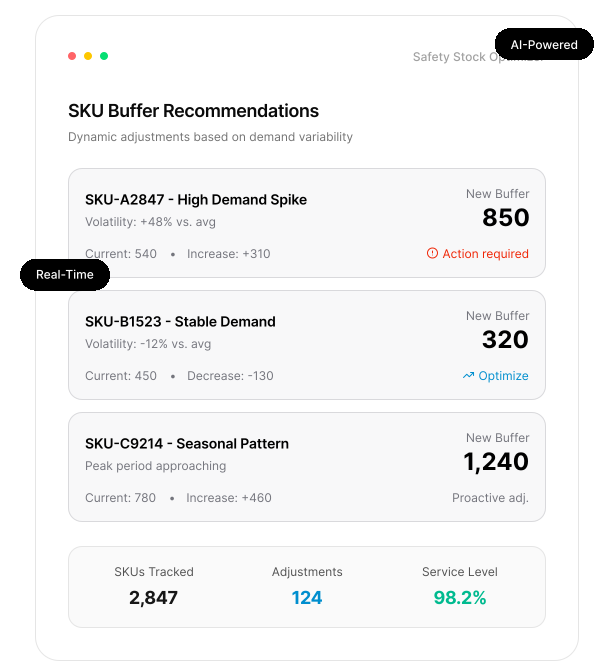
AutoOps continuously tracks demand, recalculates optimal safety stock, and produces actionable recommendations. By replacing static processes with a unified, automated system, planning and inventory teams can minimize stockouts, maintain target service levels, and optimize working capital across all locations.
The Prolem
As demand patterns shift more frequently, static safety stock levels fail to keep pace with real market conditions. By the time planning teams reassess buffers and adjust inventory positions, the impact has already materialized, leading to stockouts, excess inventory, and missed service targets.

Critical Pain Points
Manual Safety Stock Reviews
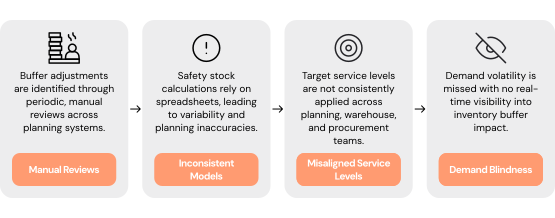
Buffer adjustments are identified through periodic, manual reviews across planning systems.
Inconsistent Calculations
Safety stock models rely on spreadsheets, leading to variability and planning inaccuracies.
Misaligned Service Levels
Target service levels are not consistently applied across planning, warehouse, and procurement teams.
Uncaptured Demand Volatility
Changes in demand patterns are often missed or underestimated during planning cycles.
Limited Real-Time Visibility
Teams lack continuous insight into demand variability and its impact on inventory buffers.
Our Solution
One configurable operational platform for continuous safety stock optimization. AutoOps integrates demand history, inventory, and planning data into a single system of record where demand variability is monitored in real time and safety stock levels are recalculated automatically. Planning leaders can define volatility thresholds, service level targets, and seasonality rules, without relying on manual processes or disconnected tools. By unifying data, workflows, and interfaces in one platform, AutoOps enables accurate buffer management, improved service levels, and more responsive inventory planning.
Get Started
How it Works
Centralized SKU Hub
Relational data tables bring together demand history, inventory positions, lead times, and service level targets into a single, structured system.
Connect SKUs, locations, channels, and planning parameters
Standardize inputs across demand and inventory datasets
Eliminate fragmented spreadsheets and disconnected planning tools
Automated Safety Stock Calculations
No-code logic continuously recalculates safety stock based on real-time inputs.
Safety stock by SKU, location, and channel
Incorporate demand variability, lead time fluctuations, and service levels
Ensure consistent calculation logic across all planning teams
Demand Variability Monitoring
AutoOps continuously analyzes demand patterns to detect shifts in volatility.
Identify spikes, slowdowns, and pattern deviations
Apply configurable thresholds to flag meaningful changes
Continuously adapt buffers to reflect current demand behavior
Service Level–Driven Optimization
Translate service level targets directly into inventory buffers.
Align safety stock with target fill rates and SLAs
Dynamically adjust buffers as targets evolve
Ensure consistency across planning, procurement, and operations
Seasonality-Aware Adjustments
Built-in logic accounts for recurring demand patterns and seasonal trends.
Detect and model seasonal demand fluctuations
Adjust safety stock proactively ahead of demand cycles
Avoid reactive planning during peak and low periods
Planner Alerts & Workflow Automation
Workflow engine flags exceptions and guides planners to take action.
Trigger alerts for significant deviations in demand or buffer levels
Route recommendations through configurable workflows
Enable faster, structured decision-making
Who Benefits
Measurable results across operations, ecommerce, and leadership
Planning Teams
Improve forecast alignment with dynamic, data-driven safety stock recommendations
Reduce manual analysis and reactive adjustments 
Maintain consistent planning logic across SKUs and locations
Inventory & Supply Chain Teams
Optimize inventory levels while maintaining service targets
Reduce excess and slow-moving stock
Respond faster to demand and supply variability
Procurement Teams
Align ordering decisions with real-time inventory requirements
Reduce emergency procurement driven by stockouts
Improve supplier coordination with better demand visibility
Founders & Business Leaders
Balance service levels with capital efficiency at scale
Gain visibility into inventory health across the network
Drive more resilient and responsive supply chain operations
Business Impacts
10–20%
Lower Inventory Carrying Costs Eliminate excess buffers driven by outdated assumptions
20–30%
Reduction in Stockouts Maintain service levels even during demand volatility
2-3×
Faster Planning Cycles Reduce manual intervention and decision lag
More Agile Operations
Respond dynamically to changing demand conditions
Turn Demand Variability into Inventory Confidence
See how AutoOps enables real-time safety stock optimization with continuous visibility into demand variability and automated buffer adjustments. Detect demand shifts early, align inventory with service level targets, and maintain optimal stock levels across locations, without manual intervention or custom development.